

A well-maintained hard tennis court offers a superior playing experience, characterized by consistent ball bounce and reliable footing. However, without proper care, these surfaces can quickly deteriorate, leading to costly repairs and potential safety hazards.
Understanding the primary causes of hard tennis court damage and how to prevent it is indispensable for facility managers, club owners, and private court owners who want to protect their investment and ensure the longevity of their courts.
This guide will detail the common factors that contribute to hard court damage, from environmental influences to regular wear and tear. More importantly, it will provide a comprehensive overview of preventative maintenance strategies. By following these best practices, you can keep your court in prime condition, reduce long-term costs, and provide a safe, high-quality surface for players.
Understand the Impact of Weather and Environment
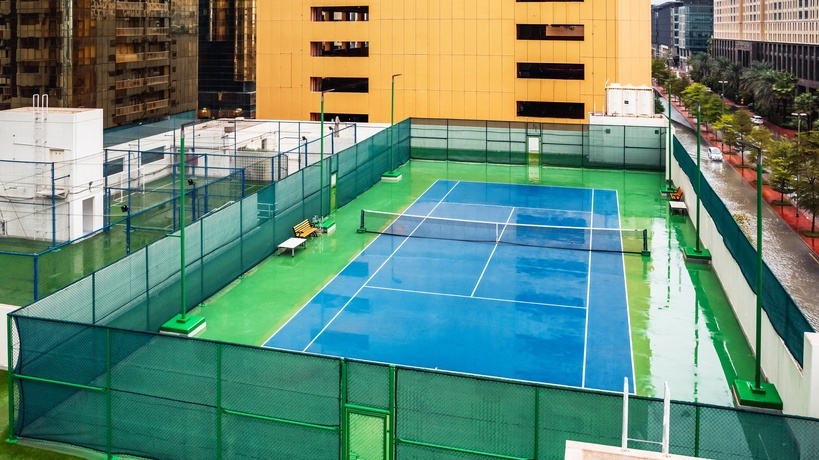
The outdoor environment poses the greatest challenge to the integrity of a hard tennis court. Constant exposure to the elements can lead to various problems if not managed proactively.
Sunlight and UV Radiation
Direct sunlight and ultraviolet (UV) radiation are leading causes of surface degradation. Over time, UV rays break down the acrylic binders in the court's paint, causing the colors to fade and the surface to become brittle. This process, known as oxidation, weakens the top layer, making it more susceptible to cracking and peeling.
To mitigate this, court owners should make sure to coat their surface with high-quality, UV-resistant acrylic paint. While this does not make the court immune to sun damage, it significantly slows the degradation process. Regular cleaning also helps remove dirt that can hold heat and accelerate UV damage.
Moisture and Water Damage
Water is a hard court's most formidable adversary. Rain, humidity, and improper drainage can all lead to severe structural issues. When water penetrates the surface through existing cracks, it can erode the underlying asphalt or concrete base. This erosion creates voids under the surface, which eventually leads to larger cracks, depressions, and widespread structural failure.
Standing water also promotes the growth of mold, mildew, and algae. These organisms not only create slippery, unsafe playing conditions but also stain and degrade the acrylic surface. In colder climates, the freeze-thaw cycle poses an even greater threat. Water that seeps into cracks will expand when it freezes, widening the cracks and causing significant damage over a single winter.
Effective water management is therefore essential. Courts must have a proper slope to facilitate drainage, and landscaped areas surrounding the court should direct water away from the court. Regularly clearing debris from the court surface prevents water from pooling. Using tennis court maintenance equipment available at All Star Tennis Supply, such as a foam roller, after rainfall, is a key step in preventing moisture-related damage.
Manage Surface Debris and Contamination
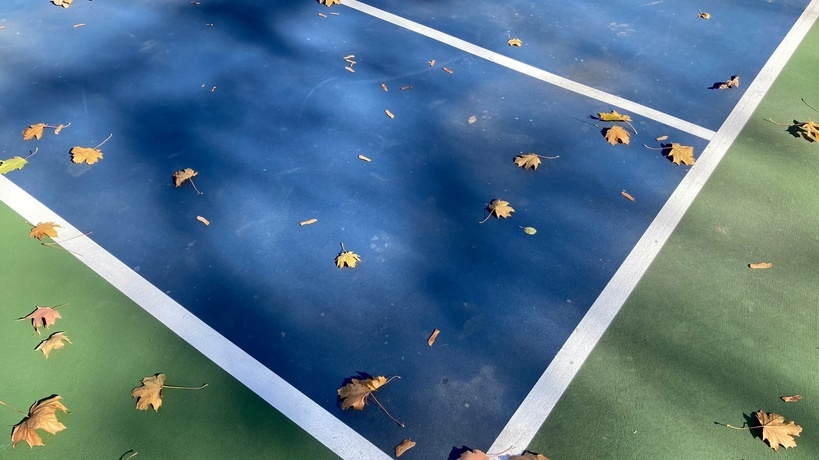
Debris might seem like a minor nuisance, but it can cause serious harm to a hard court surface over time. Leaves, twigs, dirt, and other organic materials can stain the court and create an environment where mold and algae thrive.
Organic Debris
When leaves and other plant matter decompose on the court, they release tannins that can leave stubborn brown stains on the acrylic surface. This debris also traps moisture, creating damp spots that encourage mildew growth. A daily routine of sweeping or using a leaf blower is the most effective way to keep the court free of organic materials.
Abrasive Materials
Sand, gravel, and other small, hard particles act like sandpaper under the feet of players. This abrasive action wears down the acrylic coating and can cause scratches and gouges. These particles end up on the court from players' shoes and the surrounding areas due to the wind. Placing shoe cleaning stations at court entrances and regularly sweeping the surface can greatly reduce this type of wear.
Prevent Damage From Use and Equipment
While tennis courts are for play, certain activities and equipment can cause unintended damage. Educating players and staff on proper court usage is a key component of any maintenance plan.
Improper Footwear
Players should always wear non-marking, soft-soled tennis shoes. Hard-soled shoes, boots, or shoes with black marking soles can scuff, scratch, and permanently mark the court surface. Clear signage indicating proper footwear requirements can help enforce this rule.
Heavy Equipment and Furniture
Never drag heavy items like benches, umpire chairs, or ball machines across the court surface. This action can easily gouge or scratch the acrylic layers. Instead, use dollies or ensure equipment has non-marking wheels for transport. When placing furniture on the court, check that the legs have protective caps to prevent them from digging into the surface.
Implement a Proactive Maintenance Routine
A consistent maintenance schedule is the most effective strategy for preventing long-term damage. The goal of this routine is to address minor issues before they escalate into major problems requiring expensive repairs. This approach is central to understanding the causes of hard tennis court damage and how to prevent it.
Daily and Weekly Tasks
- Inspect the Court: Walk the court daily to check for new cracks, standing water, or debris.
- Remove Debris: Use a leaf blower or soft-bristle broom to clear the surface of leaves, dirt, and other materials.
- Address Spills: Clean any food, drink, or sunscreen spills immediately to prevent staining.
Monthly and Seasonal Tasks
- Gentle Washing: Lightly rinse the court with a hose monthly to wash away fine dust and pollen. For a deeper clean, use a mild detergent and a soft-bristle broom, then rinse thoroughly. Avoid using a high-pressure washer, as it can strip the paint and damage the acrylic surface.
- Check for Growth: Inspect for any signs of mold, mildew, or moss, especially in shaded or damp areas. Treat these spots promptly with an appropriate court-safe cleaning solution.
- Inspect Net Posts and Anchors: Ensure that net posts and center strap anchors are secure and do not cause cracks or heaving in the surrounding surface.
Invest in Your Court's Future
Protecting a hard tennis court from damage is not about intensive repairs but consistent, preventative care. By understanding the threats posed by weather, debris, and improper use, you can implement a maintenance strategy that preserves the safety, playability, and appearance of your court for years to come. A proactive approach saves money in the long run and ensures your facility remains a top choice for players.